Ruskin Soufflé Glaze Vase, Circa 1930: Sea-Green Mist from a Vanished Recipe
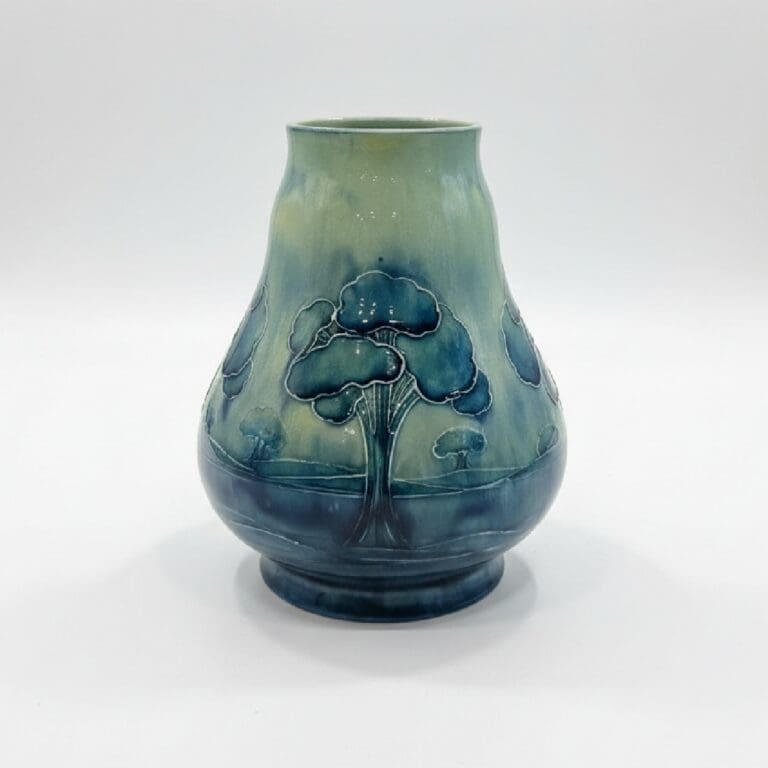
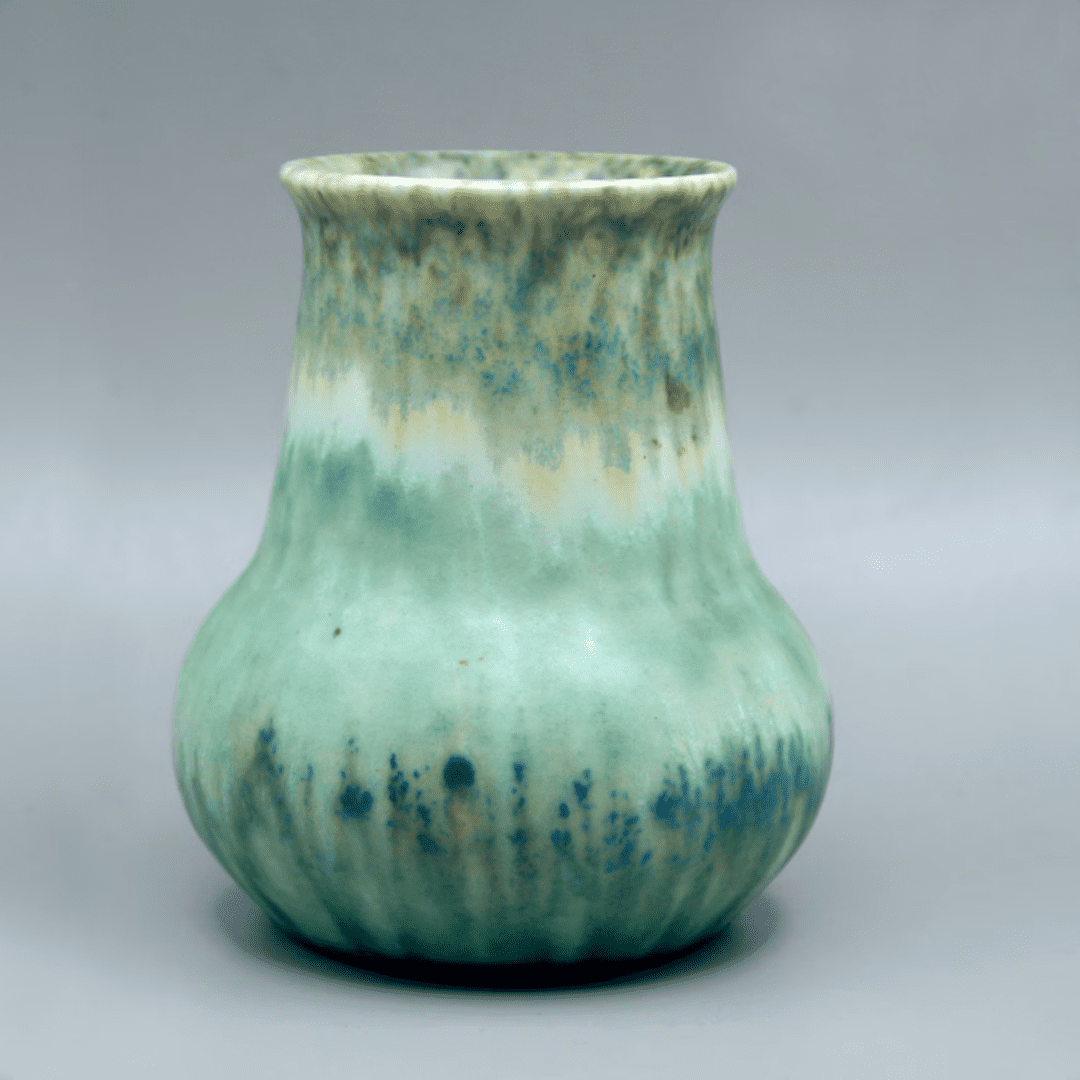
The color seems to drift across the clay like sea mist: pale at the neck, deepening to a streaked, ocean green at the foot. No one can make it this way anymore.
The story
The Ruskin Pottery was founded in 1898 in Smethwick, near Birmingham, by Edward R. Taylor, principal of the Birmingham School of Art, and run by his son, William Howson Taylor. Named after the writer and critic John Ruskin, it became famous for its glazes: luminous lustres, crystalline effects, blood-red flambés and the soft, mottled soufflé glazes that were among the first it perfected.
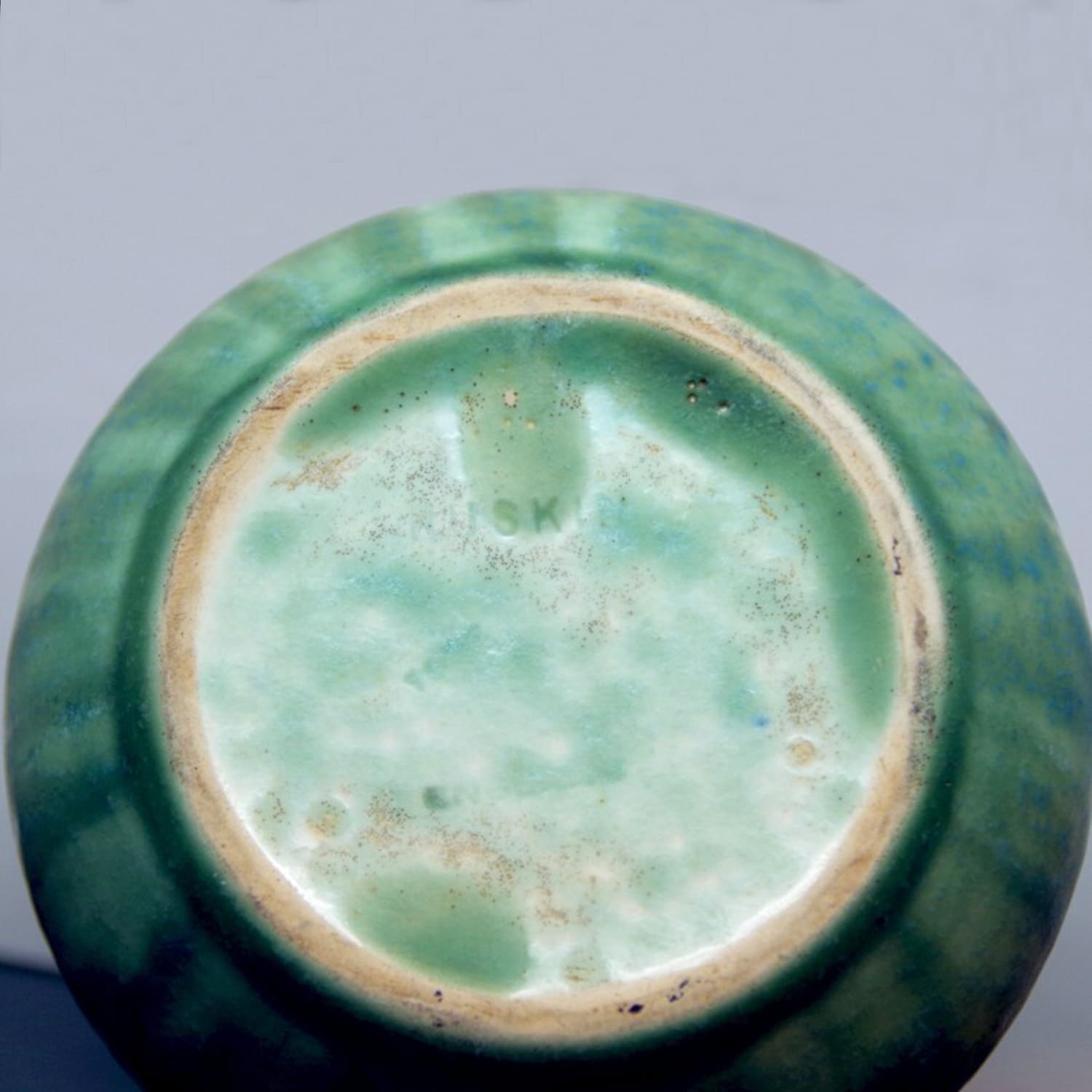
Howson Taylor guarded his recipes closely. Production ceased in the early 1930s, and before his death in 1935 he destroyed his notes so his glazes could never be copied. This little vase dates from around 1930, near the very end. Its rounded body and flared neck carry a soufflé glaze that shifts from pale celadon to deep sea green, with darker streaks running toward the foot.
In the room
At just under five inches tall, it is a jewel for a small space: a windowsill, a bathroom shelf, a bookcase or a desk, where the light can play across the glaze. Its greens sit beautifully with white plaster, natural linen, botanical prints and other pieces of studio pottery, and it is just the right size for a few sprigs of herbs or a single small bloom.
Why collectors seek it
Because the recipes were destroyed, every Ruskin piece is part of a closed, finite body of work, and soufflé glazes are one of the pottery’s signature achievements. Late pieces from the final years have their own appeal as some of the last made before the kilns went cold.
The details
- Maker: Ruskin Pottery, Smethwick, England
- Potter: William Howson Taylor
- Date: Circa 1930
- Glaze: Green soufflé
- Size: About 4-3/4 in. tall