Pair of Zsolnay Jardinieres, Late 1800s: Ruby Lustre from Pécs
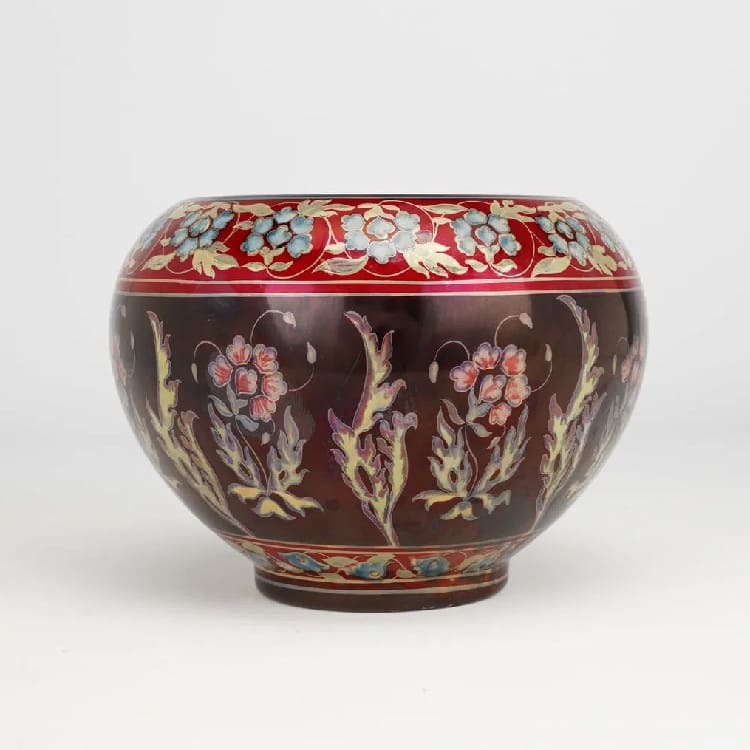
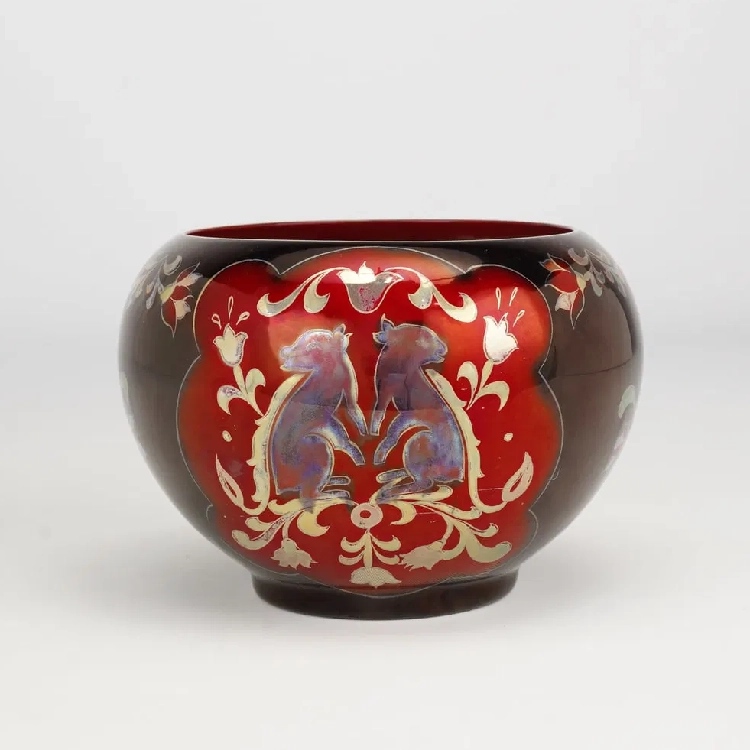
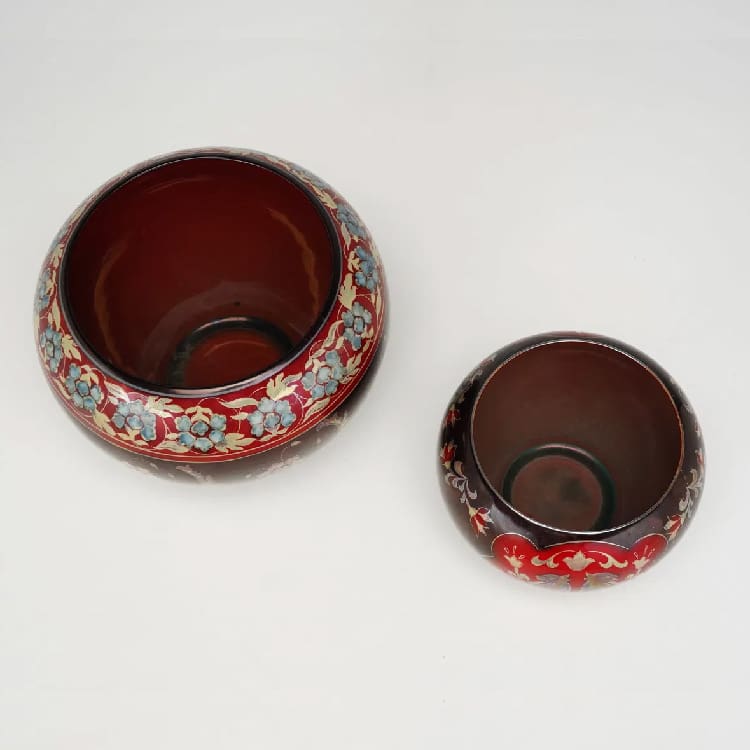
Turn them in the light and the deep red ground glows like garnet, while cream, gold and turquoise ornament winds around them as finely as embroidery.
The story
The Zsolnay factory was founded in Pécs, Hungary, in 1853 by Miklós Zsolnay. His son Vilmos joined in 1863 and turned the small works into a name known across Europe, showing at the great world fairs. In 1893 the factory introduced eosin, an iridescent metallic glaze developed with the chemist Vince Wartha that became Zsolnay’s signature and a favorite of Art Nouveau artists.
These two jardinieres date from the late 1800s and are signed by Zsuzsa Frajtics. Both have a lustrous ruby ground, painted with flowing floral and scroll ornament in cream, gold and turquoise around the body and rim. The larger stands about 4-3/4 inches tall and the smaller about 3 inches, and both are in exceptional condition.
In the room
A matched pair is a gift to a stylist. Set them at either end of a mantel or console, group them on a coffee table, or tuck small plants or orchids into them on a sunny sill. Their ruby and gold tones are rich against deep green, navy or warm white, and they bring jewel-box warmth to a library, dining room or entry.
Why collectors seek it
Nineteenth-century Zsolnay is the foundation of Hungarian decorative arts collecting, and signed, decorated pieces in exceptional condition are prized. Having both pieces together gives a collector a ready-made pair.
The details
- Maker: Zsolnay, Pécs, Hungary
- Date: Late 1800s
- Signed: Zsuzsa Frajtics
- Form: Pair of jardinieres
- Size: Larger: about 4-3/4 in. tall × 6 in. wide; smaller: about 3 in. tall × 4-1/2 in. wide
- Condition: Exceptional